
Path to Becoming an Associate Professional Ergonomist
(Path to Associate Professional Ergonomist, APEX)
Associate Professional Ergonomist certification covers three domains. Applicants may seek certification in the following domains:
- Associate Professional Ergonomist – Physical (APEP)
- Associate Professional Ergonomist – Cognitive (APEC)
- Associate Professional Ergonomist – Macro (APEM)
The process for obtaining Associate Professional Ergonomist certification is illustrated in Figure 1. Applicants must meet the following eligibility criteria:
- Be a life member of the Ergonomics Society of Thailand (EST).
- Hold at least a bachelor's degree.
2.1 Applicants holding a bachelor's degree in a field related to Human Factors and Ergonomics (HFE):
(a) If the programme is accredited by the Certifying Board of Professional Ergonomists (CBEST), applicants must have completed courses covering at least 45 hours of Basic Knowledge in HFE and at least 90 hours of Specific Knowledge in the HFE domain for which certification is sought (see details of Basic Knowledge and Specific Knowledge content for each domain in Part 6).
(b) If the programme is not accredited by the CBEST Board, applicants must submit documentary evidence of the content covered in HFE-related courses and/or training for individual assessment.
2.2 Applicants holding a bachelor's degree in another field must have at least 5 years of HFE-related work experience and submit documentary evidence of the content covered in HFE-related courses and/or training for individual assessment.
3. Provide at least 2 reviewed HFE research papers or reports on at least 2 HFE projects that have been implemented in practice in the domain for which certification is sought.
Associate Professional Ergonomist certification is valid for 5 years. Renewal is assessed on the basis of points earned across four parts. Applicants seeking renewal may submit relevant supporting evidence for each part described below. Renewal requires at least 70 points earned over the preceding 5 years, including at least 10 points from Part 2 or Part 3. The scoring criteria for each part are as follows:
Part 1. Points are awarded based on regular HFE-related work (e.g. industrial work, teaching, consultancy, clinical practice and research), as follows:
1.1 Full-time HFE work: up to 16 points per year (80 points over 5 years).
1.2 Part-time HFE work: up to 12 points per year (60 points over 5 years).
Part 2. Points are awarded for participation in HFE-related activities (e.g. academic conferences and training), based on the duration of participation, up to a maximum of 2 points per day.
Part 3. Points are awarded for the dissemination of HFE research and project work (e.g. research publications, books, textbooks and applied HFE projects implemented in practice), as follows:
3.1 Research papers published in peer-reviewed academic journals: 6 points for the first author or corresponding author; 3 points for other co-authors.
3.2 Research papers published in conference proceedings: 3 points for the first author or corresponding author; 1 point for other co-authors.
3.3 Reports on HFE projects implemented in practice: 6 points for the principal investigator; 3 points for co-investigators.
Part 4. Other professional services outside regular work responsibilities (e.g. delivering training, providing consultancy, reviewing research and conducting risk assessments): 2 points for 1 day (6 hours); 1 point for less than 1 day.
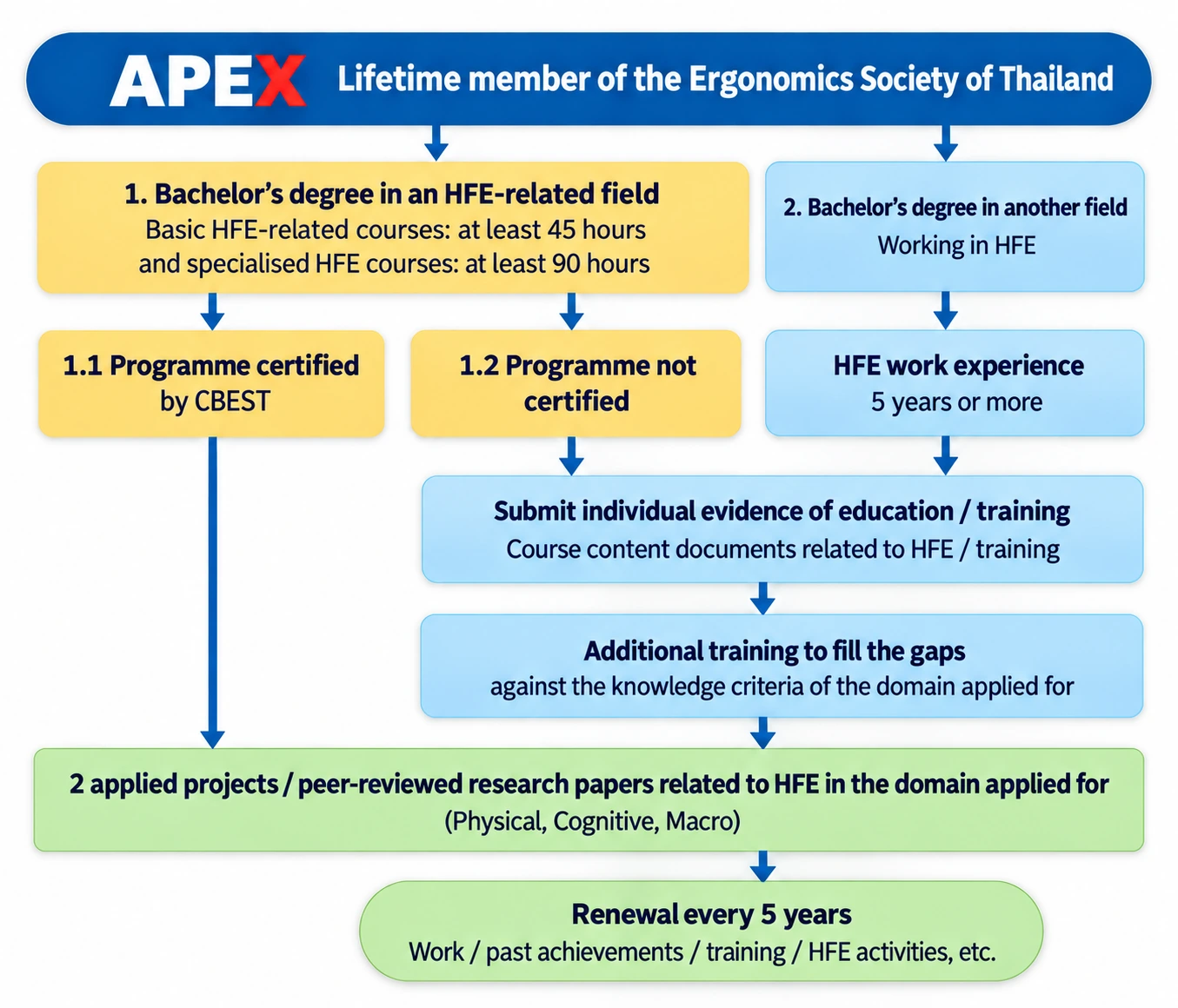
Figure 1 Flowchart of the process for obtaining Associate Professional Ergonomist certification